

What Does Forecheck Mean in Hockey?
Imagine this: It’s the final period of a heated hockey game, the score is tied, and tension fills the air. In a moment of strategic brilliance, one team intensifies its forechecking, creating an electrifying atmosphere that captivates every fan in the arena. This is the essence of forechecking in hockey – a blend of aggression, strategy, and skill that can turn the tides of a game in a heartbeat.
Jack Hughes gives us a prime example of both the backcheck and the forecheck creating turnovers and scoring chances in this video from NHL.com‘s YouTube channel.
Welcome, hockey enthusiasts, coaches, and players! Today, we dive deep into the world of forechecking, a pivotal aspect of hockey that often decides the fate of a game.
Whether you’re a raving fan analyzing every play, a coach strategizing for the next big win, or a player looking to sharpen your skills, this comprehensive guide will unveil the secrets and strategies of effective forechecking.
What is Forechecking in Hockey?
At its core, forechecking is a defensive tactic employed in the offensive zone. Its main objective? To pressure the opposing team, disrupt their gameplay, and ultimately regain control of the puck. Forechecking is not just a play; it’s an art form, requiring precision, timing, and teamwork. It’s about creating a scoring opportunity out of pressure, turning defense into offense, and keeping the opponent on their toes.
But what makes forechecking so crucial in hockey? It’s simple: control and momentum. By effectively implementing forechecking strategies, a team can control the puck more, create scoring opportunities, and maintain offensive momentum. It’s a game-changer, both literally and figuratively.
This guide is tailored for everyone passionate about hockey. For fans, it’s a window into the strategic nuances that make the game thrilling. For players, it’s a playbook to enhance your on-ice performance. And for coaches, it’s a resource to refine strategies and outsmart the opposition.
So, buckle up as we explore the fascinating world of forechecking. From its basics to advanced tactics, player roles to training tips, and much more – we’ve got it all covered. Let’s embark on this journey to master the art of forechecking and appreciate hockey like never before.
The Basics of Hockey Forechecking

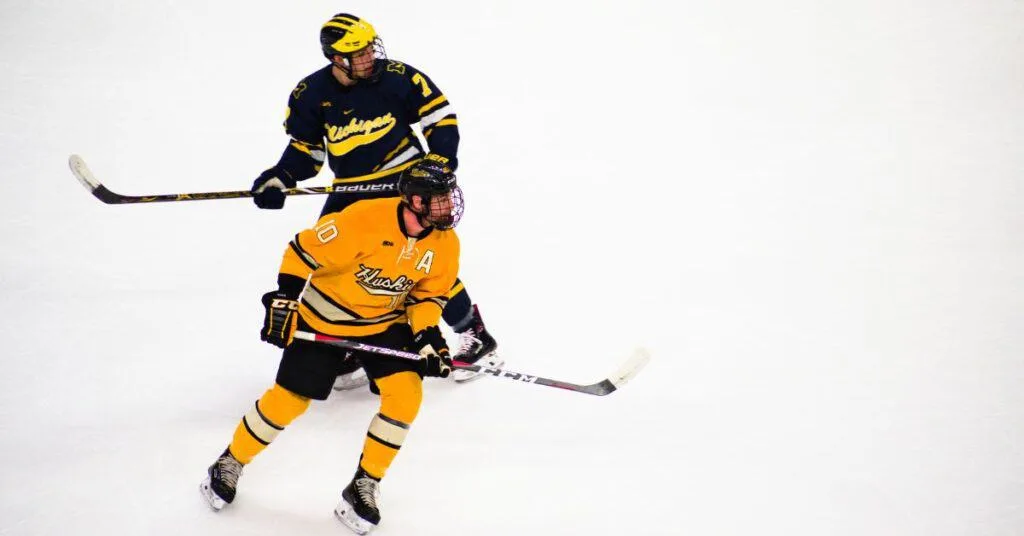
Historical Evolution of Forechecking
Forechecking has evolved significantly throughout hockey’s history. Initially, teams used basic pressure tactics, but as the game developed, so did the sophistication of forechecking strategies. From the early days of sporadic pressure to the structured and strategic approaches of modern hockey, forechecking has become a cornerstone of team defense. The evolution mirrors changes in the game’s pace, player skill sets, and tactical innovations.
Forechecking vs. Backchecking: Understanding the Differences
Forechecking and backchecking, though both critical defensive tactics, serve different purposes. Forechecking occurs in the offensive zone, where a team applies pressure to regain the puck. In contrast, backchecking is the act of a player returning to their defensive zone to disrupt an opponent’s offensive play. While forechecking focuses on puck recovery and offensive setup, backchecking is about halting the opponent’s advance and protecting one’s goal.
The Role of Forechecking in Modern Hockey
In today’s fast-paced hockey, forechecking is indispensable. It’s not merely about puck recovery; it’s about dictating the game’s tempo, disrupting the opponent’s rhythm, and creating scoring opportunities. Modern forechecking involves intricate strategies tailored to opponents’ weaknesses, making it a dynamic tool for coaches and players.
Key Rules Governing Forechecking
While forechecking is a vital strategy, it must be executed within the rules of hockey. Key regulations include avoiding offsides during aggressive forechecks, adhering to icing rules, and maintaining legal physical contact to avoid penalties like charging or boarding. These rules ensure that forechecking remains a skillful and strategic play rather than a reckless or dangerous tactic.
Forechecking in Professional Leagues: Case Studies
Examining forechecking in professional leagues like the NHL offers valuable insights. Case studies of teams like the Tampa Bay Lightning or the Boston Bruins reveal how effective forechecking can control the game and lead to championships. These teams demonstrate forechecking’s power in both defensive prowess and offensive generation, showcasing its role in professional hockey’s highest levels.
Forechecking Strategies and Explained
The 1-4 Strategy: Conservative Forecheck Approach
The 1-4 forechecking strategy is a conservative style. Also known as the neutral zone trap, it involves a single forward putting pressure on the opposing team in the offensive zone while the other four players are positioned defensively in the neutral zone. This approach is ideal for protecting a lead, as it reduces the opponent’s offensive opportunities and forces them to navigate through a densely populated neutral zone.
- Single Forward Pressure: One forward aggressively pressures the puck carrier in the offensive zone, aiming to disrupt the opponent’s play and force turnovers.
- Defensive Positioning: The other four players maintain a defensive stance in the neutral zone, creating a barrier against offensive advances.
- Ideal for Protecting Leads: This conservative strategy is effective when holding onto a lead by limiting the opponent’s offensive plays.
- Neutral Zone Trap: The dense positioning in the neutral zone makes it challenging for the opposing team to progress forward, effectively trapping them.
- Reduced Offensive Risk: Not committing many players forward minimizes the risk of counterattacks breaking out of the opposing team’s defensive zone.
- Strategic Patience: The strategy requires patience and discipline, relying on forcing errors rather than proactively attacking.
This strategy is a tactical choice, particularly effective in certain game situations where controlling the pace and protecting a lead is paramount.
The 1-2-2 Strategy: Balanced Play
In the 1-2-2 formation, the center applies pressure, supported by two forwards along the boards to disrupt passing lanes. The defensive players maintain their standard positions. This strategy suits teams with physically dominant wingers who excel in board play, effectively controlling the play and limiting clearing attempts.
- Center’s Role: The center forward leads the charge, applying direct pressure on the puck carrier in the offensive zone.
- Support Along the Boards: Two forwards position themselves along the boards to disrupt passing lanes and prevent easy exits from the zone.
- Defensive Stability: The two defenders maintain standard positions, balancing the play and guarding against potential breakouts.
- Ideal for Physical Teams: This formation is particularly effective for teams with strong, physical wingers who can dominate along the boards.
- Controlled Aggression: It strikes a balance between offensive pressure and defensive security, allowing for a more controlled style of play.
- Effective in Limiting Clearing Attempts: By covering key areas, this strategy can effectively limit the opposing team’s clearing attempts, keeping the play in the offensive zone.
This strategy offers a balanced approach, suitable for teams looking to apply pressure without overcommitting offensively.


The 2-1-2 Strategy: Aggressive Forecheck Team Play
More aggressive than the previous strategies, the 2-1-2 involves two forwards pressuring deep in the zone, with a third forward supporting nearby. Defenders position along the boards. While this strategy can be highly effective in puck recovery and creating scoring chances, it requires excellent communication and leaves the team vulnerable to counterattacks.
- Two Forwards Applying Pressure: Involves two forwards aggressively pressuring deep in the offensive zone to force turnovers.
- Third Forward Support: A third forward remains close by to support and capitalize on any turnovers created by the leading forwards.
- Defenders Along the Boards: Defenders position along the boards to contain the play within the offensive zone and support the forwards as well as protect the blue line.
- High Offensive Potential: This strategy is effective in puck recovery and creating scoring opportunities.
- Requires Strong Communication: Effective execution demands excellent communication and coordination among team members.
- Vulnerability to Counterattacks: Its aggressive nature can leave the team open to counterattacks, requiring a well-balanced defensive response.
The 2-1-2 strategy is suitable for teams with strong offensive capabilities and good coordination, looking to assert dominance in the offensive zone.
The 3-2 Strategy: High-Risk, High Reward
The 3-2 strategy is an all-out offensive tactic, ideal when in desperate need of a goal. It involves three players pressuring in the offensive zone, with the remaining two close by. This approach is an offensive blitz, often employed by most teams in the dying moments of a period or as a last-ditch effort to score. However, it leaves the team extremely vulnerable to counterattacks.
- Three Players on Offense: Employs three forwards in the offensive zone to apply intense pressure and create scoring opportunities.
- Supportive Duo: Two defensive players stay close, ready to assist in offense or transition to defense.
- Offensive Blitz: Characterized by its aggressive, high-pressure approach aimed at overwhelming the opponent.
- Ideal for Urgent Scoring Needs: Often used when desperately needing a goal, such as in the final minutes of a game. Meant for create scoring chances.
- High Risk of Counterattacks: This aggressive stance increases vulnerability to counterattacks, requiring a swift transition to defense if possession is lost.
- Last-Ditch Scoring Effort: Typically a strategy for crucial moments, acting as a final push to alter the game’s outcome.
The 3-2 strategy is a bold move that can lead to significant rewards but requires careful management of the inherent risks.
Choosing the Right Strategy
Selecting the appropriate forechecking strategy depends on various factors, such as the team’s skill set, the game situation, and the opponent’s playing style. Understanding and adapting these strategies can be the key to a team’s success on the ice.
Whether you are trying to maintain strong defensive play to defend a lead by maintaining possession of the puck, or if you are being overly aggressive in an attempt to create turnovers for a scoring chance, successful forechecking will be key to your team’s success.
Player Roles and Responsibilities in Forechecking
The Chaser: Frontline of Forechecking
The chaser, usually a forward, spearheads the forechecking effort. This player’s role is to aggressively pursue the puck carrier, apply pressure, and disrupt the opponent’s play. Their relentless pursuit is crucial for initiating turnovers and setting the tone for the forecheck.
Support Players: Cutting Off Passing Lanes
While the chaser applies direct forechecking pressure on the other team, the support players play a vital role in cutting off passing lanes and closing down options for the puck carrier. These players must anticipate plays, position themselves strategically, and be ready to transition from defense to offense quickly. Their job is to create an odd-man rush or a scoring chance.
Defensive Pairings: Balancing Attack and Defense
Defenders in a forechecking system must balance the aggression of their forwards with a readiness to defend against counterattacks. They hold the line, support offensive plays, and ensure that the team is not left vulnerable at the back.
The Goalie’s Role in Forechecking
Often overlooked in forechecking, the goalie plays a crucial part. A goalie’s awareness and ability to play the puck can turn a defensive situation into an offensive opportunity, aiding in quick transitions and catching the opponent off-guard.
Forechecking Team Dynamics: Communication and Coordination
Effective forechecking is rooted in excellent team dynamics. It requires constant communication, understanding of each player’s role, and seamless coordination. Each player’s awareness of their responsibilities and trust in their teammates’ abilities is fundamental to a successful forecheck. When communication breaks down the forecheck fails.
Advanced Forechecking Tactics
Adjusting Strategies Mid-Game
Mastering forechecking involves the ability to adapt strategies during a game. This agility depends on reading the game’s flow, understanding the opponent’s adjustments, and changing tactics accordingly. Coaches play a pivotal role in calling for strategic shifts, whether it’s moving from a conservative 1-4 to a more aggressive 2-1-2, based on game dynamics.
Counteracting Opponent’s Forechecking
Teams must also learn to counteract effective forechecking by opponents. This includes developing breakout strategies, using quick passes, and employing tactics like the reverse play to evade pressure.
Conclusion: Forechecking Systems in Ice Hockey
As we reach the end of our deep-dive exploration into the world of forechecking in hockey, we’ve covered a vast array of strategies, tactics, and insights. From the historical evolution to advanced techniques, we have seen how integral forechecking is to the game’s dynamic. It’s a skill that requires physical prowess, mental acuity, and strategic thinking, both individually and as a team.
For the raving hockey fans, coaches, and players who’ve joined us on this journey, remember that forechecking is not just a part of the game; it’s an art that can turn the tide of play. It embodies the spirit of hockey – a blend of agility, strategy, and teamwork. Whether you’re watching a game, coaching a team, or playing on the ice, appreciating the nuances of forechecking can elevate your understanding and enjoyment of hockey.
Keep practicing, keep analyzing, and most importantly, keep enjoying the incredible game of hockey!