

What Position in Hockey Scores the Most? An In-Depth Analysis
Hey there, hockey fans! Ever wondered what position in hockey tends to light the lamp most often? Stick around, and let’s dissect this faster than a Zamboni smooths ice!
Hockey, with its electrifying pace and high-scoring nature, keeps fans on the edge of their seats. One of the perennial debates in the sport is which position scores the most goals. Is it the forwards, known for their offensive prowess and speed? Or do the defensemen or even goaltenders occasionally get in on the action? In this article, we delve into the statistics, strategies, and unique characteristics of each position to determine which one reigns supreme in the quest for goals in the sport of hockey.
Forwards: The Offensive Powerhouses
When it comes to scoring goals, forwards are the undisputed kings of the ice. These players are strategically positioned to attack, with their primary focus on putting the puck in the back of the net. Forwards are known for their agility, stickhandling skills, and ability to create scoring opportunities. They occupy the key positions in the offensive zone, often in front of the opponent’s net, where they can capitalize on rebounds and deflections.
Centers, wingers, and even enforcers on forward lines contribute significantly to a team’s goal-scoring efforts. They take face-offs, set up plays, and execute precise shots. The NHL’s all-time leading scorers, including legends like Wayne Gretzky, Mario Lemieux, and Jaromir Jagr, have been forwards who mastered the art of scoring. Their strategic positioning, offensive instincts, and ability to read the game make forwards the position with the highest goal-scoring numbers.
Ah, the forwards—the glam rockstars of hockey. Center, left wing, or right wing, they’re all part of the Forward Club. Forward positions create scoring chances and score goals. The center position and wingers score the most goals. These forward positions are often judged by their point totals, but there’s more to it.
Forwards Role on the Team
Primarily, forwards are the playmakers. They’re often relied upon to control the puck, set up plays, create scoring opportunities and of course, score goals.
Types of Forwards
- Snipers: These are your sharpshooters. Give them a tiny window, and they’ll thread the needle.
- Playmakers: More about assists than goals. They’re the puppet masters, making everyone around them better.
- Power Forwards: Think muscle with finesse. They’re strong, they’re agile, and they’re not afraid to go to the front of the net.
Defensemen: The Blue-Line Bombers
While forwards are known for their scoring, defensemen play an essential role in a team’s offensive strategy. These players often start the play from the defensive zone, making breakout passes to initiate offensive rushes. While they may not score as frequently as forwards, defensemen are responsible for those critical long-range shots from the blue line during power plays. Their slapshots are known for their velocity and accuracy, making them a threat to opposing goaltenders.

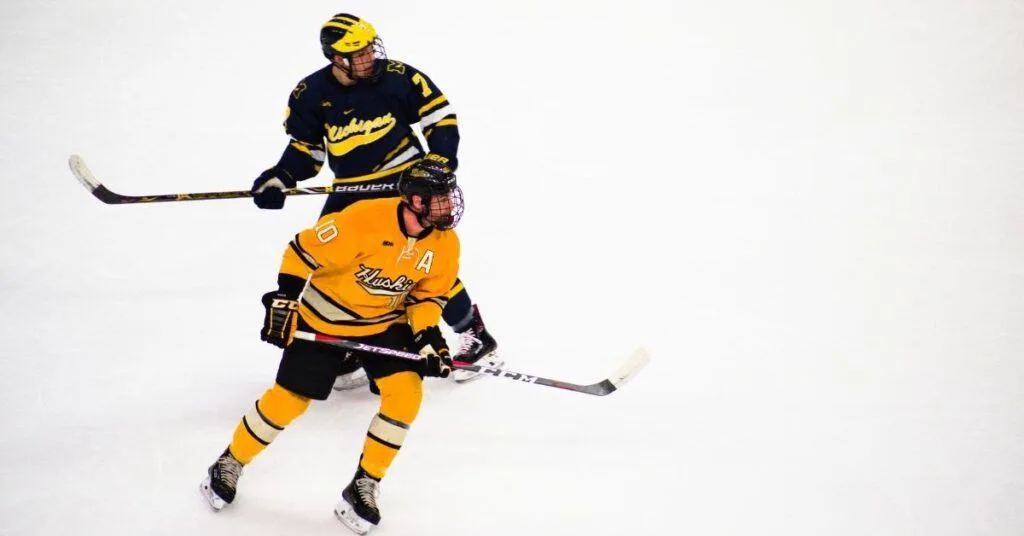
Legendary defensemen like Bobby Orr and Paul Coffey revolutionized the position by becoming offensive dynamos. They demonstrated that defensemen could contribute significantly to a team’s goal-scoring efforts. Today, players like Erik Karlsson and Brent Burns continue to follow in their footsteps, showcasing the offensive capabilities of defensemen. Although their goal totals may not match those of forwards, their ability to set up plays and provide firepower from the blue line makes defensemen crucial contributors to a team’s offensive success.
Often unsung heroes, defensemen are the backbone of any good team. They’re not just about blocking shots and body checks; they’ve got game in the offensive zone too.
Defensemen’s Role on the Team
A defenseman’s bread and butter is stopping the opponent from scoring. But hey, when the opportunity arises, they’ll jump into the offensive play.
Types of Defensemen
- Stay-at-Home: These are your defensive stalwarts. Not known for scoring but incredibly reliable.
- Two-Way: These guys balance offense and defense. They can make that crucial block and still join a rush up the ice.
- Offensive: Think of them as a fourth forward at times. They’re particularly deadly on the power play.
Goaltenders: The Ultimate Guardians
Goaltenders, while not typically associated with scoring goals, are the ultimate guardians of the net. Their primary role is to stop pucks from entering the net, but there have been rare instances where goaltenders have found themselves on the score sheet. A goalie can be credited with a goal if they are the last player on their team to touch the puck before it goes into the opposing team’s net. This situation occurs very infrequently and is often the result of a fortunate bounce or a long-distance empty-net goal.
Last but never least, the goalies. These are the people you love when they’re on your team and can’t stand when they’re not. Why? Because a great goalie can steal a game for you.


Goalie’s Role on the Team
The goalie’s primary task? Block that puck. Whether it’s with their glove, blocker, pads, or even their mask, the goal is to keep that net empty.
Goal Scoring as a Goalie
When it comes to scoring, it’s a rare feat for this hockey position. But it does happen in ice hockey on a rare occasion. Whether it’s a long shot down the ice or capitalizing on an opponent’s mistake, goalie goals are a sight to behold.
So, there you go! While forwards might be the prima donnas when it comes to lighting up the scoreboard, defensemen and goalies also get their share of the limelight. After all, hockey is a team sport, and everyone’s got their part to play!
Offense Is the Best Defense: Why Forwards Score More
Their Role on the Ice.
Forwards are the action heroes of hockey, always in the thick of the drama. You see, the game plan often revolves around them. Why? Because they’re the designated point collectors. While defensemen hang back, forwards are given the freedom to venture deep into enemy territory. They get the puck, they make the plays, and more often than not, they’re the ones smacking it into the back of the net.
Time Spent in the Offensive Zone
Here’s the thing: if you’re always hanging out where the action is, you’re bound to get a piece of it, right? That’s the case with forwards. These players spend the bulk of their time loitering with intent in the offensive zone. Imagine it like this—you won’t catch any fish if you’re not by the water. The more time forwards spend close to the opponent’s net, the more shots they can take, and guess what? More goals.
Special Teams Advantage
Ah, special teams. This is where forwards really get to shine. Ever watched a power play and noticed how the ice seems, well, less crowded? That’s because it is! One less opponent on the ice means more room to work your magic. And who’s front and center during these golden opportunities? You guessed it, the forwards. They’re strategically positioned to take advantage of this extra space and are often the beneficiaries of well-crafted plays designed to end with the puck in the net.
So, if you’re a forward, congratulations! You’ve landed one of the most thrilling jobs in sports, with more chances to be a hero. But remember, with great power comes great responsibility—keep those red lights flashing!
hockey, forwards are the position to watch.
Frequently Asked Questions About Scoring Goals in Hockey
Which forward position scores the most in hockey?
It’s generally the center or the winger who takes home the scoring glory. These positions are primarily offensive roles, responsible for setting up plays and taking shots on goal. While the specifics can vary depending on team strategy and player skill, it’s often the wingers and centers who lead in goals and points.
How often do goalies score in professional hockey?
Ah, the elusive goalie goal—talk about a rare gem! In the NHL, it’s happened less than 20 times. Usually, it occurs when the opposing team has pulled their goalie, and there’s an empty net to aim at. But let’s be real: seeing a goalie score is like capturing lightning in a bottle—rare but electric!
What are some key stats to look for in high-scoring players?
If you’re diving into stats, keep an eye on Goals Per Game (GPG), Shooting Percentage, and Points Per Game (PPG). Also, don’t overlook the less flashy stats like assists and plus-minus ratings. These can give you a holistic view of a player’s scoring potential. Remember, scoring isn’t just about the goals; it’s also about being in the right place at the right time.
How has the role of the defenseman changed in modern hockey?
In today’s hockey, defensemen are not just the guardians of their own net; they’re increasingly becoming offensive threats. With plays designed to involve them in the attacking zone and a rise in ‘offensive defensemen’ like Erik Karlsson, the role has evolved. It’s an exciting time for defensemen who can do more than just block shots!
How can young players improve their scoring ability?
Practice, practice, practice! But it’s not just about taking shots; it’s also about understanding the game. Young players should focus on improving their skating skills, puck handling, and positional awareness. Watching and learning from the pros can offer invaluable insights. And hey, don’t forget to work on your defense; today’s best scorers are often great two-way players!
Feel like you’ve leveled up in your hockey knowledge? You bet! Now, go enjoy the game with a newfound appreciation for every slap shot, goal, and hat trick!