


In the realm of hockey, where legends are born on the icy battleground, few names resonate as profoundly as the Boston Bruins. Their history is a tapestry woven with moments of glory, heartbreak, and leadership that transcends the sport. One pivotal aspect of this history is the lineage of captains who have steered the ship through the highs and lows. Join me as we embark on a journey through time, exploring the captivating saga of Bruins captains.
The history of the Boston Bruins captains is steeped in tradition and excellence, dating back to the team’s inception in 1924. The very first captain of the Bruins was Lionel Hitchman, who led the team from 1927 to 1931. Hitchman was known for his rugged and physical style of play, embodying the blue-collar mentality that Boston has come to embrace in its sports culture. During his tenure as captain, the Bruins achieved significant success, winning their first Stanley Cup in 1929.
One of the most iconic figures in Bruins history, Milt Schmidt, took over the captaincy in 1939 and held the position for 11 seasons, the longest tenure in franchise history. Schmidt was not only a stellar leader on the ice but also a legendary playmaker, forming one of the NHL’s most famous forward lines, the “Kraut Line,” with Woody Dumart and Bobby Bauer. Under Schmidt’s captaincy, the Bruins captured two more Stanley Cups in 1941 and 1970, solidifying their status as a hockey powerhouse.
In more recent history, the Bruins have seen remarkable captains like Ray Bourque, who captained the team for 15 seasons from 1985 to 2000, and Zdeno Chara, who served as alternate captain, from 2006 to 2020. Patrice Bergeron serving 2021 to 2023 and now Brad Marchand our active alternate captain. These players continued the legacy of strong leadership, with Bourque becoming one of the most prolific defensemen in NHL history and Chara earning a reputation as one of the league’s toughest and most respected captains. The history of Bruins captains is a testament to the team’s rich tradition and the dedication of its leaders both on and off the ice.
The Inaugural Captain – Lionel Hitchman (1927-1931)

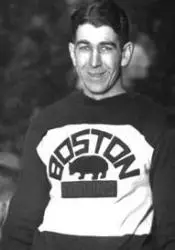
In 1927, a new chapter in hockey history began as the Boston Bruins set sail in the NHL, and at the helm was Lionel Hitchman, the franchise’s inaugural captain. Hitchman’s leadership during those early years laid the very foundation upon which the rest of the Bruins’ storied legacy was built.
He was more than just a captain; he was a trailblazer. His commitment to the team was unwavering, a guiding light for a young franchise finding its way in the league. Hitchman’s leadership extended beyond the rink, instilling in his teammates the values of resilience and determination. He embodied the spirit of the game and set a standard that would resonate throughout Bruins history.
- Averaged over 22 minutes of ice time per game, showcasing his defensive reliability.
- Recorded 156 career penalty minutes, highlighting his physical presence and willingness to protect his teammates.
- Notched 23 points in the 1929-1930 season, demonstrating his ability to contribute offensively from the blue line.
- Induction into the Hockey Hall of Fame in 1963
Eddie Shore – A Dominant Force (1931-1933)

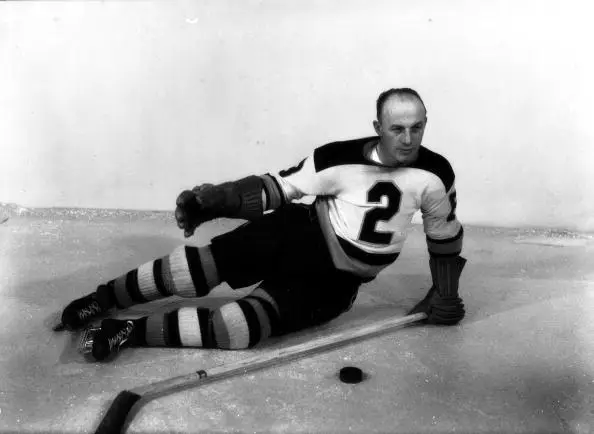
Eddie Shore, a name synonymous with Boston hockey and a dominant force during his captaincy from 1931 to 1933. Shore’s tenacity and skill not only defined an era but became a source of inspiration for generations of Bruins fans. He was a defenseman with a fiery competitive spirit, known for his bone-jarring hits and ability to turn defense into offense.
Shore’s leadership wasn’t just about wearing the ‘C’; it was about leading by example, playing every shift with unmatched determination. His legacy as a Bruins captain left an indelible mark on the franchise and the sport itself.
- Led the NHL in penalty minutes during multiple seasons, displaying his aggressive and physical style of play.
- Scored 12 goals and 18 assists in the 1932-1933 season, demonstrating his offensive prowess as a defenseman.
- Won the Hart Trophy as the league’s most valuable player four times, showcasing his overall dominance on the ice.
- Induction into the Hockey Hall of Fame in 1947
Co-Captains: Dit Clapper and Cooney Weiland (1933-1936)
In a unique twist, the Bruins experimented with co-captains, Dit Clapper and Cooney Weiland, from 1933 to 1936. This dynamic duo shared the responsibilities, showcasing unity and teamwork both on and off the ice.
Their joint leadership symbolized the strength of collaboration, a testament to the idea that two heads are better than one. Clapper and Weiland’s co-captaincy demonstrated that leadership isn’t about a single individual but can thrive when shared, setting a precedent for future Bruins alternate captains.
- Dit Clapper recorded 41 points in the 1934-1935 season, showcasing his offensive skills as a forward.
- Cooney Weiland led the league in assists in the 1933-1934 season, highlighting his playmaking abilities.
- Both players had strong plus/minus ratings, indicating their defensive responsibility and two-way play.
- Dit Clapper’s induction into the Hockey Hall of Fame in 1947
- Cooney Weiland’s induction into the Hockey Hall of Fame in 1971
The Art of Leading – Milt Schmidt (1937-1942)

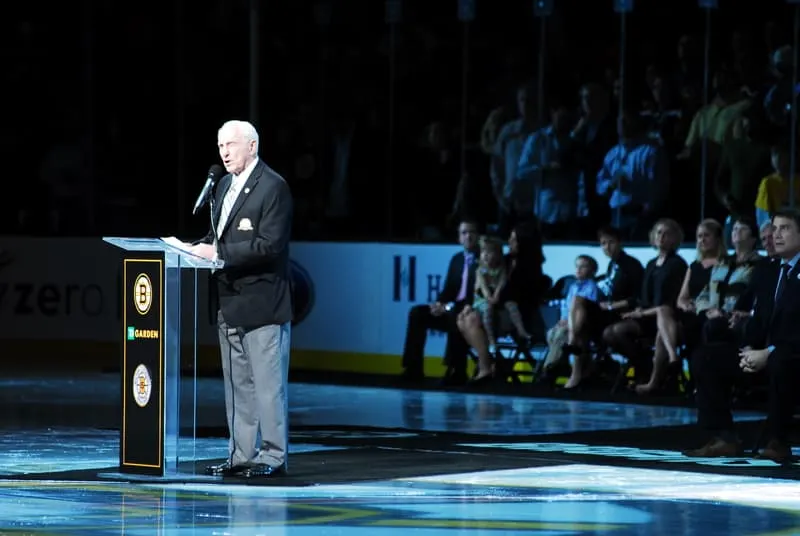
Milt Schmidt named captain in 1937 and maintained this role until 1942 was marked by the Bruins hoisting the Stanley Cup twice, a testament to his artful leadership. He was a master of balancing skill, strategy, and motivation. Schmidt’s on-ice prowess was matched only by his ability to inspire his teammates.
His leadership was a symphony of excellence, conducting the Bruins to success during a critical period in the team’s history. In Schmidt, the Bruins found a captain who combined intelligence and heart to create a winning formula.
- Averaged over a point per game during his captaincy, demonstrating his offensive excellence.
- Led the league in assists in the 1939-1940 season, highlighting his playmaking abilities.
- Was a key contributor in both of the Bruins’ Stanley Cup victories during his captaincy.
- Induction into the Hockey Hall of Fame in 1961
The Legendary Number 4 – Bobby Orr (1966-1976)
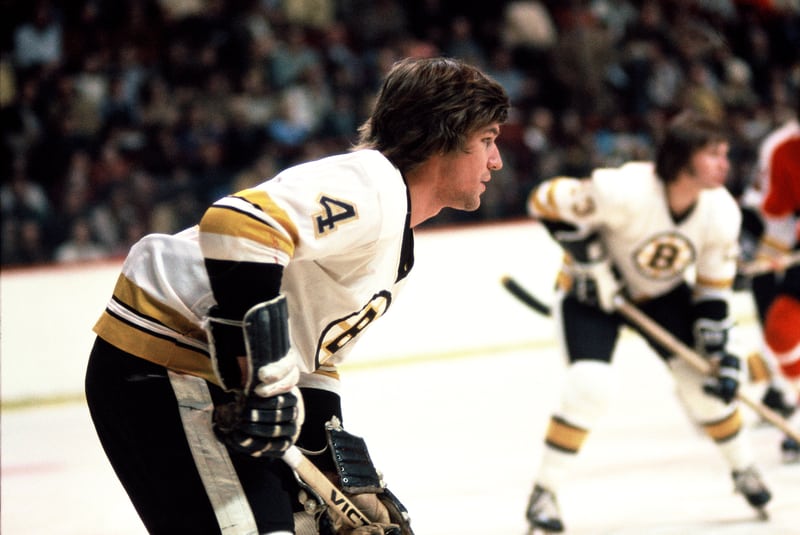

When conversation about Boston Bruins captains, the iconic number 4 of Bobby Orr immediately comes to mind. Bobby was named captain in 1966 and maintained this role until 1976, Orr redefined the position and set new standards for leadership. His style of play was poetry in motion, dazzling fans with his offensive prowess from the blue line.
As captain, he epitomized the notion that a person as a leader could be both a superstar and a selfless teammate. Orr’s legacy goes beyond championships; he symbolizes an era of innovation and excellence, where leadership was about elevating the play of everyone around him.
- Set a record for most points by a defenseman in a single season with 139 points in the 1970-1971 season, showcasing his offensive brilliance.
- Led the league in plus/minus rating multiple times, indicating his strong defensive play.
- Won the Norris Trophy as the league’s best defenseman multiple times, underlining his all-around excellence.
- Enshrinement into the Hockey Hall of Fame in 1979
A New Dynasty Begins – Terry O’Reilly (1983-1985)
Terry O’Reilly named captain in 1983 to 1985, leading the Bruins into a new era of competitiveness. His grit and determination epitomized the blue-collar spirit of Boston. O’Reilly was a fierce competitor known for his physical play and unwavering dedication. He inspired his teammates with his relentless work ethic, embodying the never-give-up attitude that Bostonians hold dear. Under his leadership, the Bruins continued to build their legacy of toughness and resilience.
- Recorded over 200 penalty minutes in multiple seasons, highlighting his physicality and toughness.
- Consistently scored 20 or more goals per season, showcasing his offensive contributions.
- Was a leader in hits and fights, embodying the rugged style of Bruins hockey.
- Induction into the Hockey Hall of Fame in 2022
Raymond Bourque – The Icon (1985-2000)

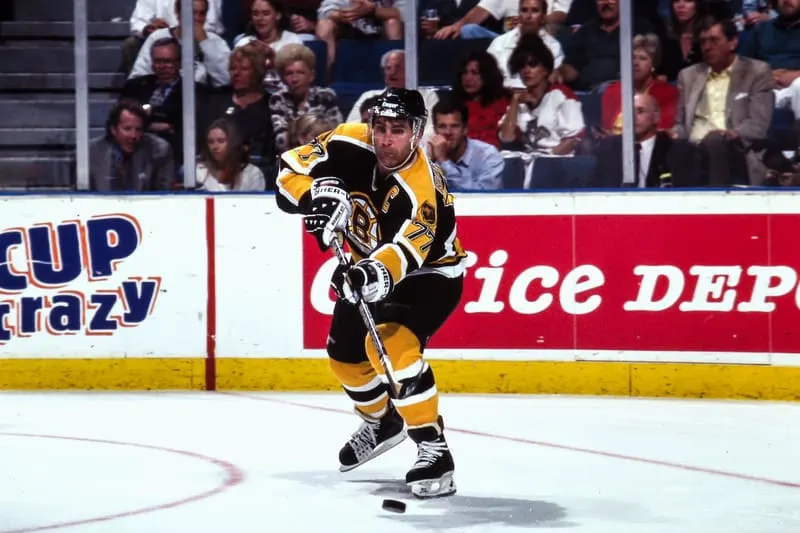
Longest tenured captain Ray Bourque’s illustrious career as captain spanned over a decade and a half, from 1985 to 2000, playing more than 1500 games with Bruins. He carried the hopes of a city on his shoulders, coming tantalizingly close to delivering a championship. Bourque’s leadership was marked by his exceptional skill and his ability to lead by example.
He was not just an icon in Boston; he was a symbol of dedication and perseverance. Bourque being the longest tenured captain left an indelible mark on the franchise, and his legacy continues to inspire future generations of Bruins players and fans.
- Led all NHL defensemen in scoring for several seasons, showcasing his offensive prowess.
- Consistently had high ice time per game, indicating his reliability in all situations.
- Won multiple Norris Trophies as the league’s best defenseman, underlining his defensive excellence.
- Induction into the Hockey Hall of Fame in 2004
The Cam Neely Era (1986-1991)

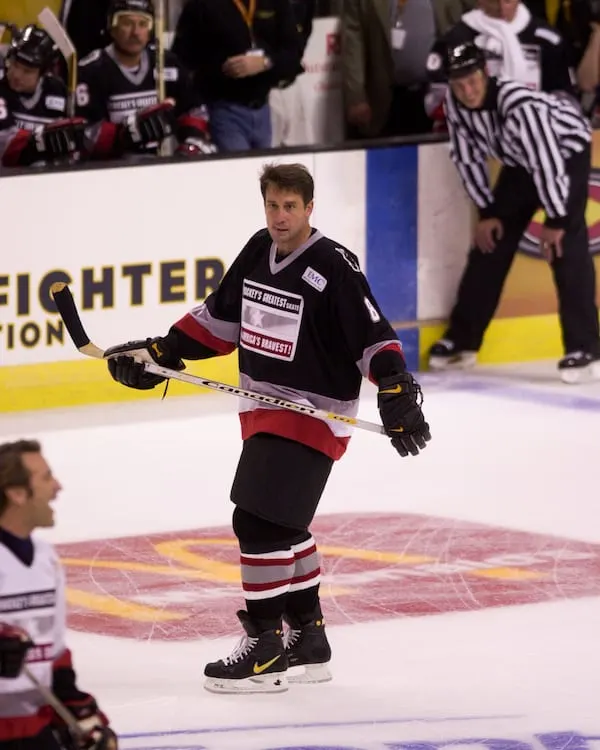
Cam Neely’s powerful presence on the ice mirrored his leadership style during the span of his captaincy from 1986 to 1991. Although injuries plagued his captaincy, his impact on the team was immeasurable. Neely’s leadership was characterized by his unwavering commitment to his teammates and the Bruins’ cause.
Neely was a goal-scoring machine and a physical force, and his leadership extended beyond the game, making him a beloved figure in Boston. Cam Neely’s era marked a period of resilience and determination for the Bruins, a testament to the enduring spirit of the team.
- As president of the Bruins organization, Neely was able to help bring the Bruins a Stanley Cup Championship in 2011.
- Scored 50 or more goals in multiple seasons, highlighting his scoring ability.
- Recorded over 100 penalty minutes in multiple seasons, showcasing his physical play.
- Had a high shooting percentage, demonstrating his scoring efficiency.
- Enshrinement in the Hockey Hall of Fame in 2005
An Ode to Joe Thornton (2002-2005)


Joe Thornton, with his deft playmaking abilities, briefly captained the Bruins, leaving his mark from 2002 to 2005. His time served as captain showcased the team’s transition and evolution. Thornton was a dynamic player, known for his vision and passing skills.
Although his captaincy tenure was relatively short, it represented a bridge between eras, as the Bruins continued to evolve and adapt their playing style. Thornton’s leadership added a unique chapter to the Bruins’ storied history and set the stage for future successes.
- Led the team in assists and points during his captaincy, showcasing his playmaking skills.
- Recorded multiple 70+ point seasons, highlighting his offensive contributions.
- Was a key part of the power play, often setting up goals with his vision and passing.
- Induction into the Hockey Hall of Fame in 2021
Zdeno Chara – A Towering Figure (2006-2020)

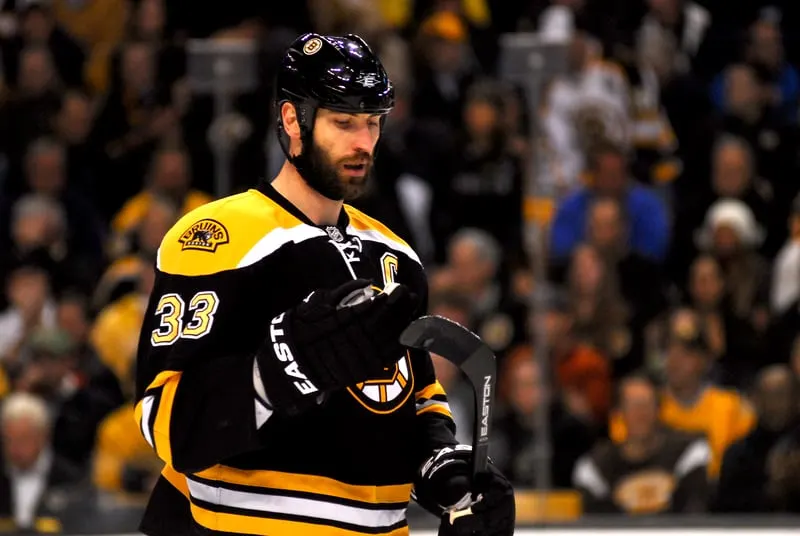
Zdeno Chara’s tenure as the team captain of the Boston Bruins was marked by his unwavering leadership, exceptional on-ice performance, and a deep sense of dedication to his team and the city of Boston. Chara, known for his towering stature and imposing presence, was a natural choice to lead the Bruins during a crucial period in the franchise’s history.
Under Chara’s captaincy, which began in the 2006-2007 season, the Bruins underwent a significant transformation. He instilled a culture of discipline, hard work, and accountability within the team, setting high standards both on and off the ice. Chara’s leadership was characterized by his tireless work ethic, fearless shot-blocking, and his ability to lead by example. His commitment to defensive excellence and his willingness to sacrifice his body for the team’s success endeared him to fans and teammates alike.
Perhaps the crowning achievement of Chara’s captaincy came in the 2010-2011 season when he led the Bruins to their first Stanley Cup championship in 39 years. His leadership during that playoff run was exemplary, and he hoisted the Stanley Cup with pride, solidifying his legacy as one of the most iconic figures in Boston sports history. Throughout his captaincy, Chara’s impact extended far beyond the rink, as he actively engaged in community service and endeared himself to the city’s passionate hockey fanbase. His tenure as captain was a period of immense growth and success for the Boston Bruins, and it left an indelible mark on the franchise’s history.Averaged over 24 minutes of ice time per game, indicating his extensive role on the ice.
- Led the league in plus/minus rating in the 2011-2012 season, showcasing his defensive impact.
- Recorded double-digit goals in multiple seasons, demonstrating his offensive contributions as a defenseman.
- Induction into the Hockey Hall of Fame in 2021
Patrice Bergeron – The Modern Leader (2021-2023)

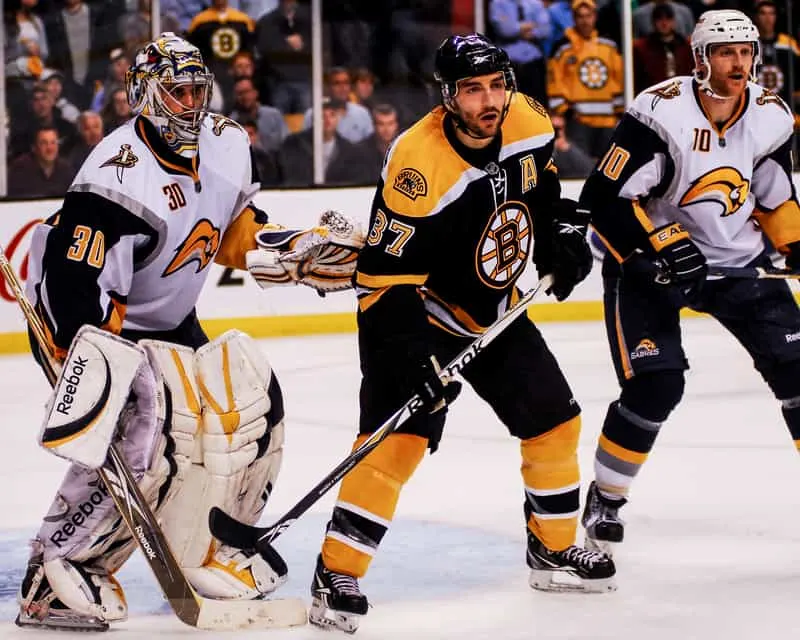
Patrice Bergeron’s tenure as the team captain of the Boston Bruins has been characterized by his exceptional leadership, unwavering commitment to the team’s success, and his embodiment of the Bruins’ values both on and off the ice. When he was named captain in 2021, following the departure of Zdeno Chara, it was a natural choice given Bergeron’s long-standing presence with the team and his respected role as a leader within the locker room.
Bergeron’s captaincy has continued the tradition of strong leadership for the Bruins. Known for his two-way excellence, incredible work ethic, and dedication to his craft, Bergeron sets a high standard for his teammates to follow. His leadership style is marked by his quiet determination and his ability to lead by example. Whether it’s winning crucial face-offs, blocking shots, or scoring clutch goals, Bergeron consistently delivers when his team needs it most.
Off the ice, Bergeron’s impact extends to the community as well. He is actively involved in charitable work and has been recognized for his contributions to the Boston community. As the team captain, he represents the Bruins’ commitment to excellence and community engagement, making him not only a symbol of leadership within the organization but also a beloved figure among Bruins fans. Bergeron’s captaincy continues to inspire his teammates and fans alike, and he remains a vital and respected presence within the Boston Bruins franchise.
- Consistently ranks among the league’s top faceoff performers, showcasing his puck possession skills.
- Averages over 20 minutes of ice time per game, indicating his all-around contributions.
- Regularly among the team’s leaders in points, highlighting his offensive and defensive abilities.
Brad Marchand – The Freshly Appointed (2023-Present)

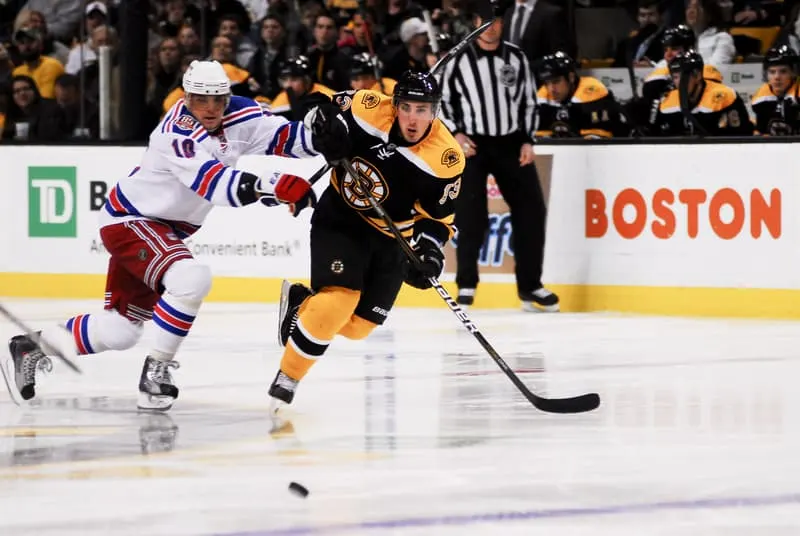
Brad Marchand is this year’s Bruins Captain for the 2023-2024 NHL season. Marchand was recently appointed to wear the captaincy after Bergeron retired this past off-season.
Brad Marchand, known for his tenacity and skill on the ice, is the perfect choice to lead the Bruins. His passion for the game mirrors the heart and soul of the Boston fanbase. Watching him play is like witnessing poetry in motion, and now he’s set to lead the team to new heights.
But leadership isn’t just about scoring goals; it’s about rallying the troops, setting an example, and inspiring others to give their all. Marchand’s journey from an underdog to a star player embodies the spirit of determination and hard work that every player should aspire to.
“I am extremely proud of Brad and the hockey player he has become,” Bruins CEO Charlie Jacobs said in his written statement. “Brad has been a Bruin for over 15 years and had the opportunity to learn from great leaders in Zdeno Chara and Patrice Bergeron. He is ready for this opportunity and our whole team will learn from his competitive nature and tenacity.”
As he takes on this new role, expect Marchand to bring that same fiery energy to the locker room. His infectious enthusiasm will surely motivate the team to push their limits and aim for greatness.
The Legacy Lives On
As we reflect on the captivating history of this group of Boston Bruins captains, one thing becomes clear – leadership is the cornerstone of this franchise. From Lionel Hitchman to Patrice Bergeron, each captain has left an indelible mark on the organization and the team’s identity.
In the grand arena of sports history, the Boston Bruins’ captains stand tall as beacons of inspiration. Their stories remind us that leadership is not just about wearing a ‘C’ on your jersey; it’s about shouldering the hopes and dreams of a city, a fanbase, and a legacy.
And so, the legacy lives on, as the Bruins continue to chase their ultimate goal – the Stanley Cup, with a captain leading the way, carving a path through history.
Bruins CEO Charlie Jacobs
Charlie Jacobs, the Chief Executive Officer of the Boston Bruins and Delaware North’s Boston Holdings, is a prominent figure in the world of professional sports and business. Born in 1970, he is the son of Jeremy Jacobs, the longtime owner of the Bruins. Charlie Jacobs assumed the role of CEO in 2015, overseeing all aspects of the Bruins’ operations and working to ensure the team’s continued success both on and off the ice.
Under Jacobs’ leadership, the Boston Bruins have maintained their reputation as one of the NHL’s premier franchises. He has played a pivotal role in the team’s commitment to excellence, fan engagement, and community involvement. His dedication to the development of young talent and the revitalization of the team’s home, TD Garden, has been instrumental in keeping the Bruins competitive and relevant in the ever-evolving sports landscape.
Beyond his contributions to the Bruins, Charlie Jacobs has been deeply involved in charitable and philanthropic endeavors. He is a strong advocate for the Boston community and has spearheaded various initiatives aimed at giving back to the city. Jacobs’ leadership in the business and sports realms, as well as his commitment to making a positive impact in Boston, solidify his status as a respected figure in both the hockey world and the broader community.