


Legends on Ice: The Top 10 Montreal Canadiens Captains Who Defined Hockey Excellence
In the illustrious history of the Montreal Canadiens, synonymous with hockey excellence, team captains stand as a testament to leadership, skill, and championship pedigree. “Legends on Ice: The Top 10 Montreal Canadiens Captains Who Defined Hockey Excellence” pays homage to these exceptional leaders, celebrating their indelible impact on the sport.
From George Hainsworth’s pioneering days to contemporary figures like Shea Weber, each captain played a vital role in shaping the Canadiens’ identity, leading the team to victory and embodying the spirit of hockey excellence.
This compilation delves into the lives, careers, and legacies of these iconic figures, exploring their unique contributions in the pantheon of Canadiens greats. Whether it’s Jean Béliveau’s maestro-like leadership or the tenacity of captains like Butch Bouchard and Yvan Cournoyer, the retrospective celebrates the enduring impact of leaders who not only excelled on the ice but defined the very essence of hockey greatness in Montreal.
“Legends on Ice” serves as a tribute to these captains, symbols of inspiration for players and fans, embodying the relentless pursuit of excellence echoing through the Bell Centre and the hearts of Canadiens faithful worldwide.
Montreal Canadiens Captains – The Early Icons
In the nascent years of the Montreal Canadiens, a lineage of early icons emerged, each donning the captaincy with a pioneering spirit that laid the groundwork for the franchise’s enduring legacy. From Jack Laviolette, the team’s inaugural captain, to Newsy Lalonde and beyond, these early leaders not only navigated the challenges of the formative years but also etched their names into hockey history.
Without the luxury of modern statistical documentation, their impact is felt in the intangibles — the unwavering determination, the camaraderie forged in a bygone era, and the indomitable spirit that characterized Canadiens hockey.
These early icons, clad in the iconic red, white, and blue, set the stage for the subsequent generations of leaders, leaving an indelible mark on the Canadiens’ culture and contributing to the proud narrative that defines one of the NHL’s most illustrious franchises.
Jack Laviolette – The First Captain


Jack Laviolette, a pivotal figure in Montreal Canadiens history, holds the distinction of being the franchise’s inaugural captain, leading the team during its first season in 1909. His leadership and on-ice prowess set the tone for the Canadiens’ early years, navigating challenges in the nascent hockey landscape of the early 20th century.
In an era with limited statistics, Laviolette’s impact went beyond numbers, with his tenacity and commitment to excellence becoming a blueprint for future Canadiens captains. As the first to wear the captain’s “C,” Laviolette’s legacy resonates in hockey history, marking him not just as a player but as a foundational leader who played a pivotal role in shaping the enduring culture of the Montreal Canadiens.
Newsy Lalonde – The Original Flying Frenchman

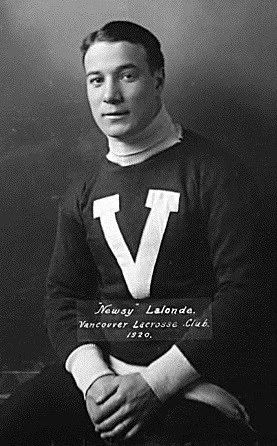
- Tenure as Captain: 1910-1911, 1912-1913, 1916-1922
- Seasons as Captain: 8
- Playoff Appearances: 3
- Stanley Cups: 0
- Career Regular season Games Played in NHL, Result: 99
- Highlights: Lalonde’s scoring ability and being named captain on three separate occasions reflect his pivotal role in shaping the early years of the team.
Newsy Lalonde, affectionately known as the Original Flying Frenchman, is a trailblazer in the early history of the Montreal Canadiens. From 1910 to 1922, Lalonde’s dynamic play on the ice revolutionized the franchise, earning him a place in the Canadiens’ record books with unmatched speed, finesse, and scoring prowess.
The moniker “Flying Frenchman” captures Lalonde’s electrifying style, inspiring a generation of players and winning the hearts of fans. Beyond his offensive brilliance, Lalonde’s leadership, including captaining the team in its early years, cements his legacy as a Montreal Canadiens icon, forever enshrined in the pantheon of hockey legends.
Impact of Early Captains on Canadiens Culture
The early captains of the Montreal Canadiens played a foundational role in shaping the enduring culture of the franchise. From Jack Laviolette, the team’s first captain, to subsequent leaders like Newsy Lalonde, these pioneers not only led on the ice but also laid the groundwork for the values and traditions that define Canadiens hockey.
In an era where statistics were less comprehensive, the influence of these captains extended beyond numerical achievements, emphasizing qualities like leadership, dedication, and a commitment to excellence.
As the Canadiens navigated the challenges of their formative years, the early captains became stewards of a culture that prioritized teamwork, resilience, and a relentless pursuit of victory. Their impact resonates through the decades, creating a lasting legacy that continues to shape the identity and ethos of the Montreal Canadiens.
Evolution of Leadership in Early National Hockey league
The evolution of leadership in early hockey, particularly in the Montreal Canadiens context, is a fascinating study in adapting to the changing dynamics of the sport. With their varied leadership styles, the early captains set the stage for this third period of evolution. Laviolette’s visionary leadership was crucial in establishing the team, while Lalonde’s on-ice brilliance showcased a more direct, impactful style of captaincy.
These early figures demonstrated that leadership in hockey was not just about tactical acumen or physical prowess; it was equally about the ability to inspire, unite a team under a common goal, and to foster a culture of excellence. This period marked the transition from a nascent, developing sport to a more structured, strategically driven game, with captains playing a pivotal role in this transformation.
Setting the Standard for Future Canadian Hockey Generations
The legacy of the Montreal Canadiens’ early captains, notably Jack Laviolette and Newsy Lalonde, extends far beyond their on-ice achievements. They set a standard for future generations, embedding a sense of pride, resilience, and excellence in the team’s DNA. Their leadership styles, combining visionary strategy and exceptional skill, laid the groundwork for what it means to be a captain of the Canadiens. This foundation of excellence and leadership integrity became a guiding light for future captains, ensuring the Canadiens’ legacy as a beacon of success and innovation in the world of hockey.
The Golden Era Leaders
The Golden Era of the Montreal Canadiens, spanning the 1950s and 1960s, was marked by a procession of extraordinary leaders who wore the captain’s “C” with unparalleled distinction. Icons like Maurice “Rocket” Richard, Jean Béliveau, and Henri Richard not only guided the Canadiens to multiple Stanley Cup triumphs but also personified the team and ownership’s commitment to excellence.
Maurice Richard, a transcendent goal-scorer, led by example and ignited the team with his fiery passion. Jean Béliveau, renowned for his poise and elegance, orchestrated the Canadiens’ dominance, securing five consecutive Stanley Cups from 1956 to 1960.
Henri Richard, the “Pocket Rocket,” continued the family legacy, adding further championships to the Canadiens’ storied history. These Golden Era captains not only brought unparalleled success to Montreal but also etched their names as architects of the team’s enduring legacy, embodying the very essence of hockey greatness.
Maurice Richard – The Passionate Leader


- Tenure as Captain: Prior to 1956-1957 season
- Seasons as Captain: 4
- Playoff Appearances: 4
- Stanley Cups:4
- Career Regular season Games Played in NHL, Result: 978
- Highlights: Richard’s tenure saw the Canadiens winning four consecutive Stanley Cups, showcasing his exceptional leadership and competitive spirit.
Maurice “Rocket” Richard’s tenure as captain of the Montreal Canadiens is not just a tale of athletic prowess but a story of passionate leadership that galvanized a team and a city. Richard’s captaincy, beginning in 1956, was characterized by an unyielding determination and fiery spirit that became synonymous with the Canadiens’ identity.
His leadership went beyond scoring goals; it was about inspiring teammates and fans alike with his relentless drive and deep love for the game. Richard’s legacy as a captain is not just in the records and points he set but in the undying spirit of passion and resilience he instilled in the Canadiens.
Jean Beliveau – The Archetypal Captain

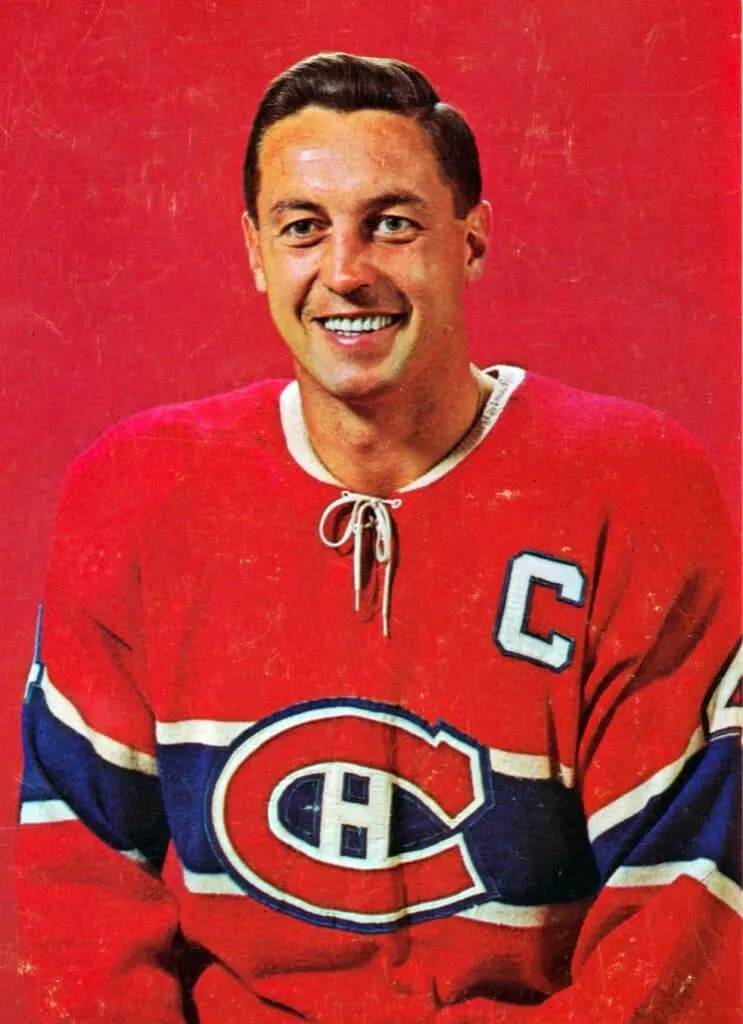
- Tenure as Captain: Prior to 1961-1962 season
- Seasons as Captain: 10
- Playoff Appearances: 9
- Stanley Cups: 5
- Career Regular season Games Played in NHL, Result: 1125
- Highlights: Beliveau is celebrated for his exemplary leadership on and off the ice, winning five Stanley Cups as captain and holding a record of 17 overall.
Jean Beliveau’s era as captain of the Montreal Canadiens, commencing in 1961, epitomized what it means to be a leader both on and off the ice. Renowned for his elegance, skill, and sportsmanship, Beliveau’s leadership style was marked by quiet confidence and exemplary conduct.
He led not only with his impressive play but with his integrity and respect for the game and its players. Beliveau’s tenure as captain saw the Canadiens reach unparalleled heights, but more importantly, it set a benchmark for leadership that transcends sports, making him a revered figure in hockey history.
Comparing the Leadership Styles of Richard and Beliveau
Maurice Richard and Jean Beliveau, both legendary captains of the Montreal Canadiens, offered contrasting yet complementary styles of leadership. Richard’s fiery, passionate approach inspired intensity and determination on the ice, while Beliveau’s calm, composed demeanor brought a sense of steadiness and grace.
This juxtaposition of leadership styles underlined the multifaceted nature of leading a team like the Canadiens. Both approaches were effective in their own right, shaping the team’s identity and contributing to its legacy in distinct but equally significant ways.
Their Contributions to the Canadiens’ Dynasty
The contributions of Maurice Richard and Jean Beliveau to the Canadiens’ dynasty extend beyond their individual accolades. They were instrumental in crafting a team ethos that valued resilience, skill, and sportsmanship.
Under their leadership, the Canadiens not only achieved remarkable success in terms of championships but also set a standard of excellence that became the team’s hallmark. Their influence shaped the generations that followed, embedding a legacy of greatness in the Canadiens’ narrative and solidifying the team’s status as a dynasty in the world of hockey.
Legacy of the Golden Era Captains
The legacy of the golden era captains Maurice Richard and Jean Beliveau transcends their time on the ice. It’s a legacy that has become a part of the cultural fabric of the Montreal Canadiens. They didn’t just lead a team; they became symbols of excellence and determination, embodying the spirit of the Canadiens.
This era of leadership left an indelible mark on the franchise, setting a precedent for future captains and ensuring that the Canadiens’ legacy would be one of winning and leading with honor, passion, and grace.
Captains of Change
The Montreal Canadiens, a franchise steeped in tradition, experienced transformative periods led by captains who ushered in change and evolution. From the dynamic leadership of Yvan Cournoyer during the 1970s to the defensive virtuosity of Bob Gainey in the 1980s, these captains of change recalibrated the team’s identity.
Yvan Cournoyer, known as “The Roadrunner,” brought a new era of speed and dynamic play, orchestrating four consecutive Stanley Cup victories. Bob Gainey, with his emphasis on defensive responsibility and team-first mentality, steered the Canadiens to additional championships and redefined the team’s strategic approach.
These captains not only navigated the winds of change but also left an enduring impact on the Canadiens, showcasing resilience and adaptability as essential elements in the team’s pursuit of excellence.
Yvan Cournoyer – The Successor of Greatness


- Tenure as Captain: Prior to 1975-1976 season
- Seasons as Captain: 4
- Playoff Appearances: 4
- Stanley Cups: 4
- Career Regular season Games Played in NHL, Result: 968
- Highlights: Cournoyer’s leadership saw the Canadiens winning four Stanley Cups in his four years as captain, marking a golden era in the team’s history
Yvan Cournoyer, stepping into the role of captain for the Montreal Canadiens in the post-Richard and Beliveau era, represented a new chapter in leadership. Known for his speed and scoring ability, Cournoyer’s captaincy was marked by a blend of dynamic play and an inherent understanding of the team’s rich legacy.
He continued the tradition of excellence set by his predecessors, adapting to the evolving demands of the game while maintaining the core values of the Canadiens. Cournoyer’s tenure as captain was a testament to his ability to honor the past while embracing the challenges of a new era in hockey.
Bob Gainey – The Defensive Maestro

- Tenure as Captain: Prior to year 1981-1982 season
- Seasons as Captain: 8
- Playoff Appearances: 8
- Stanley Cup: 1
- Career Regular season Games Played in NHL, Result: 1160
- Highlights: Known for his defensive skills, Bob Gainey was an essential part of the team, balancing the team’s dynamics and leading them to numerous successes
Bob Gainey, renowned for his exceptional defensive skills, brought a unique leadership style to the Montreal Canadiens. As captain, Gainey’s focus on defensive strategy and team cohesion marked a departure from the high-scoring leadership of his predecessors. His tenure emphasized the importance of a well-rounded approach to the game, showcasing that leadership can also be about reinforcing the team’s defensive backbone. Gainey’s captaincy underscored the evolving nature of hockey, where adaptability and tactical acumen became as vital as scoring prowess.
Guy, Guy, Guy Carbonneau
Guy Carbonneau, the former captain of the Montreal Canadiens, distinguished himself as a true leader in the hockey realm. As the team’s captain, Carbonneau’s influence extended far beyond his exceptional defensive skills, showcasing his ability to inspire and guide his teammates to success. Under his captaincy, the Canadiens secured two consecutive Stanley Cup championships in 1986 and 1993, a testament to Carbonneau’s on-ice acumen and leadership qualities. His tenure as captain remains a revered chapter in the franchise’s history, illustrating his unwavering commitment to excellence and his pivotal role in cultivating a culture of success within the Montreal Canadiens organization.
Transitioning into a New Era of Hockey
The captaincies of Yvan Cournoyer and Bob Gainey marked a significant transitional phase in the Montreal Canadiens’ history, reflecting the broader changes occurring in the sport of hockey. This era saw a shift towards a more strategic, team-oriented approach, moving beyond the focus on individual star power.
Cournoyer and Gainey, each in their unique way, navigated these changes, steering the Canadiens through an increasingly competitive and diverse landscape. Their leadership demonstrated adaptability, a crucial quality that helped the team remain at the forefront of the game during a period of significant evolution.
How These Captains Influenced the Team’s Play Style
Under the captaincies of Yvan Cournoyer and Bob Gainey, the Montreal Canadiens saw a notable shift in their play style. Cournoyer, with his remarkable speed and offensive prowess, inspired a dynamic and fast-paced approach.
In contrast, Gainey’s leadership brought a stronger emphasis on defensive play, highlighting the importance of a balanced and strategic game. This era showcased the team’s ability to adapt and evolve, reflecting the captains’ influence in leadership and shaping the Canadiens’ approach to the game, balancing offensive flair with defensive resilience.
The Impact of Technological and Tactical Evolutions
The tenure of Yvan Cournoyer and Bob Gainey as captains coincided with significant technological and tactical advancements in hockey. These changes brought new challenges and opportunities, which both captains adeptly navigated. Cournoyer’s era benefited from advancements in training and equipment, enhancing his already impressive speed and agility.
Gainey’s focus on strategy and team play paralleled the growing emphasis on tactical analysis and defensive coordination in the sport. Their adaptability to these evolving aspects of hockey not only influenced the Canadiens’ play style but also underscored the importance of continuous innovation and learning in leadership.
Modern Era Mavericks
In the ever-evolving landscape of sports, the Modern Era Mavericks emerge as trailblazers and trendsetters, reshaping the traditional narratives of their respective games. These mavericks defy conventional norms, utilizing innovative strategies, cutting-edge techniques, and a fearless mindset that sets them apart in the contemporary sports arena.
From unconventional playing styles to groundbreaking approaches in training and sportsmanship, these modern-day icons challenge the status quo, leaving an indelible mark on their sports. In an era defined by technological advancements, global connectivity, and heightened competition, the Modern Era Mavericks stand at the forefront, embodying the spirit of innovation and pushing the boundaries of what was once thought possible in the world of sports.
Saku Koivu – Leading Through Adversity


Saku Koivu’s tenure as the captain of the Montreal Canadiens, beginning in year 1999, was emblematic of courage and resilience. Koivu’s leadership was tested not just on the ice but through personal challenges, including his battle with cancer. His ability to overcome adversity and return to the ice inspired both his teammates and fans. Koivu’s captaincy was characterized by his unwavering spirit and dedication, reinforcing the idea that the role of a captain extends beyond gameplay to embody the heart and soul of the team. His tenure marked a period of emotional strength and perseverance for the Canadiens.
Brian Gionta – The American Influence


Taking the helm as the Canadiens captain in 2010, Brian Gionta brought a distinctly American influence to the role. As the first American to captain the Canadiens for a full season, Gionta’s leadership style was marked by a blend of hard work, determination, and a team-first attitude. His approach resonated well with a diverse and evolving roster, helping to bridge cultural differences and unify the team. Gionta’s tenure as captain symbolized the Canadiens’ embrace of a more globalized NHL, where leadership transcends national boundaries, fostering a spirit of inclusivity and teamwork.
Max Pacioretty – The Scoring Captain


Max Pacioretty’s captaincy, starting in 2015, brought a renewed focus on offensive prowess to the Montreal Canadiens. Known for his scoring ability, Pacioretty’s leadership was characterized by leading through example on the ice. His tenure highlighted the evolving role of a captain in modern hockey – not just a leader in the locker room, but also a key contributor on the score sheet. Pacioretty’s approach underscored the importance of a captain’s ability to elevate the team’s performance through their personal contributions, blending skill and leadership to drive the team forward.
Shea Weber – The Resilient Leader
Shea Weber’s captaincy of the Canadiens, beginning in 2018, was marked by resilience and a commanding presence on the ice. Known for his physical play and defensive prowess, Weber’s leadership style was defined by stoicism and strength. He led by example, showing resilience through injuries and challenges, embodying the grit and determination the Canadiens are known for. Weber’s tenure as captain, albeit during a time of transition for the team, reinforced the importance of steadfastness and resilience in leadership, qualities that have long been hallmarks of the Canadiens’ captains.
How Modern Challenges Shaped Leadership
The captaincies of Saku Koivu, Brian Gionta, Max Pacioretty, and Shea Weber in the modern era of the Canadiens highlight how contemporary challenges have shaped leadership. Each captain faced unique pressures, from navigating personal battles to leading through periods of transition and change in the NHL.
Their tenures reflect the evolving nature of the captain’s role, emphasizing the need for adaptability, emotional intelligence, and the ability to unify a diverse locker room. These modern-era captains demonstrated that effective leadership in hockey is as much about managing off-ice challenges as it is about on-ice performance.
The Future Nick Suzuki – A New Chapter Begins
Nick Suzuki’s appointment as captain of the Canadiens in 2022 heralds the beginning of a new chapter in the team’s storied history. As the youngest captain in recent times and the first of Asian descent, Suzuki’s leadership represents a significant milestone in evolving the team’s identity.
His role as captain comes at a time of rebuilding and transition for the Canadiens, presenting an opportunity to shape the future of the franchise. Suzuki’s leadership style, characterized by his youth, energy, and innovative approach to the game, reflects the changing dynamics of the NHL and the global nature of hockey today.
The Evolving Role of a Captain in Today’s NHL games played
The role of a captain in today’s NHL, as exemplified by Nick Suzuki’s leadership, has evolved significantly. Today’s captains are leading their teams on the ice and navigating a complex array of responsibilities off the ice.
This includes being media-savvy, handling increased scrutiny from fans and media alike, and playing a pivotal role in community engagement. The modern captain must also be adept at managing a diverse locker room, bridging generational gaps, and understanding the global aspects of the game. This evolution reflects the ever-changing landscape of professional hockey, where the role of a captain is as dynamic as the sport itself.
Expectations and Pressures on Modern Captains
The expectations and pressures on modern captains like Nick Suzuki are multifaceted, reflecting the complex nature of contemporary hockey. Today’s captains are expected to be not only skilled athletes but also effective communicators, resilient in the face of intense scrutiny and high expectations from fans, media, and the team.
They must navigate the pressures of leading in an era where social media and global attention can amplify every success and mistake. This heightened level of accountability and visibility shapes how captains approach their role, requiring a balanced mix of on-ice excellence and off-ice leadership.
NHL Enterprises
The Montreal Canadiens hold immense significance within the NHL (National Hockey League) and are considered one of the league’s most iconic and historically significant franchises. The Canadiens, often affectionately referred to as the “Habs,” have played a pivotal role in shaping the league’s history and contributing to the development and popularization of professional hockey.
Here are several key aspects that highlight the importance of the Montreal Canadiens to the NHL:
- Historical Prowess: The Canadiens are one of the Original Six teams, a group of franchises that laid the foundation for the NHL’s modern era. Founded in 1909, the Canadiens have a storied history that predates the formation of the NHL.
- Championship Legacy: The Canadiens have been remarkably successful, holding the record for the most Stanley Cup championships in NHL history with 24 titles. Their dominance in the mid-20th century, especially during the 1950s and 1960s, contributed significantly to the league’s growth and popularity.
- Cultural Impact: The Canadiens are deeply ingrained in the cultural fabric of Montreal and Quebec. The team has a passionate and devoted fan base, and its games are cultural events in the city. The Canadiens’ success and popularity have helped hockey maintain a central place in Canadian culture.
- Global Recognition: The Canadiens are globally recognized as one of the NHL’s flagship franchises. Their iconic logo, the CH, is one of the most identifiable symbols in the hockey world. The team’s impact extends beyond North America, contributing to the NHL’s international appeal.
- Contributions to the Game: The Canadiens have a history of producing legendary players, and their style of play has influenced the broader hockey landscape. The team’s commitment to excellence and tradition has set a standard for success in the NHL.
- Community Engagement: The Canadiens are actively involved in community initiatives, contributing to the league’s efforts to promote the sport and make a positive impact on local communities. The team’s community engagement reinforces its role as a leader within the NHL.
In summary, the Montreal Canadiens are not just a team within the NHL; they are a cornerstone of the league’s history, culture, and identity. Their legacy and ongoing contributions have helped shape the NHL into the dynamic and globally recognized professional hockey league that it is today.
Frequently Asked Questions
What inspired the creation of “Legends on Ice: The Top 10 Montréal Canadiens Captains” article?
The article was conceived to celebrate and honor the rich legacy of leadership within the Montréal Canadiens franchise. By highlighting the top 10 captains who have played pivotal roles in shaping the team’s history, we aim to showcase their contributions to the sport and the enduring impact they’ve had on Canadiens hockey.
How were the Top 10 captains selected, and what criteria were considered?
The selection process involved a comprehensive review of on-ice achievements, leadership qualities, impact on team culture, and the ability to inspire both players and fans. By considering a holistic range of criteria, we aimed to capture the full scope of each captain’s influence on the Montreal Canadiens.
What distinguishes the “Legends on Ice” article from other Canadiens’ captain retrospectives?
“Legends on Ice” goes beyond statistical analysis, delving into the intangibles that define great leadership. The article provides a narrative that explores the lives, legacies, and unique qualities of each captain, offering readers a deeper understanding of their role in shaping the Canadiens’ hockey excellence.
How was the historical context of each captain’s era incorporated into the article?
The article recognizes the evolving nature of hockey and how each captain contributed within the context of their respective eras. By considering the historical challenges and advancements, we aimed to showcase the adaptability and resilience of these leaders in steering the Canadiens through different periods.
Are there plans for similar retrospectives on other NHL teams or iconic figures?
While our focus is on the Montreal Canadiens in this article, we are continually exploring opportunities to delve into the histories of other NHL teams and iconic figures. Stay tuned for future retrospectives that celebrate the rich tapestry of the sport and its legendary personalities.
Where can readers find additional information about each captain’s career statistics and achievements?
For detailed and up-to-date career statistics and achievements of each captain, readers are encouraged to refer to official NHL records, team statistics, and reputable hockey databases. These sources provide comprehensive insights into the players’ on-ice contributions.
When did Guy Lafleur retire from professional hockey, and what impact did he have on the Montreal Canadiens during his illustrious career?
Guy Lafleur officially retired from professional hockey on November 15, 1984. Throughout his extraordinary career, Lafleur became an iconic figure for the Montreal Canadiens, known for his dynamic and graceful style of play. As a prolific scorer, he played a crucial role in leading the Canadiens to win, win, win, win, win, win, win, win win five Stanley Cup championships and was instrumental in establishing the team’s dominance during the late 1970s. Lafleur’s impact extended beyond his impressive statistics, as he personified the spirit of the Canadiens and left an enduring legacy as one of the greatest players in the history of the sport. His retirement marked the end of an era for both Lafleur and the Canadiens, leaving an indelible mark on the franchise and the game of hockey as a whole.
During Chris Chelios’s tenure with the Montreal Canadiens, what notable achievements and contributions did he make to the team’s success?
Chris Chelios, during his time with the Montreal Canadiens from 1983 to 1990, established himself as a cornerstone defenseman and a key contributor to the team’s success. Known for his robust defensive play and offensive capabilities, Chelios played a pivotal role in the Canadiens’ blue line. Notably, he was part of the 1985-86 team that clinched the Stanley Cup, showcasing his resilience and skill in the postseason. Chelios’s performances earned him several individual accolades, including multiple All-Star selections and a Norris Trophy as the league’s top defenseman in 1989. His time with the Canadiens laid the foundation for a remarkable career that would see him become one of the most enduring and respected figures in the history of NHL defensemen.